The Unboxable Power Framework
Six conditions. Three pairs.
One gate you walk through to get there.
This is what actually determines whether your wiring works for you - or against you.
Why I built it
For years I kept meeting some of the sharpest, most driven people I knew -
people who'd already tried everything - and watching good coaching tools fail on them anyway. Not because they weren't trying hard enough. Because the missing piece was never on the list: not another way of thinking about the problem,
but the actual state their nervous system was running in, and whether the conditions around them supported that system or fought it daily.
Once I started tracking that instead of tracking effort, the same shape kept turning up - regardless of industry, diagnosis, or job title.
Six things, again and again. I stopped asking people to push harder inside a broken configuration, and started mapping the configuration itself.
That map is what you're reading now.
For high-achievers,
high performance was never a matter of effort.
It's a matter of getting the conditions right.
How it’s built
The Unboxable Power Framework breaks into six conditions, sorted into three pairs, entered through a single gate.
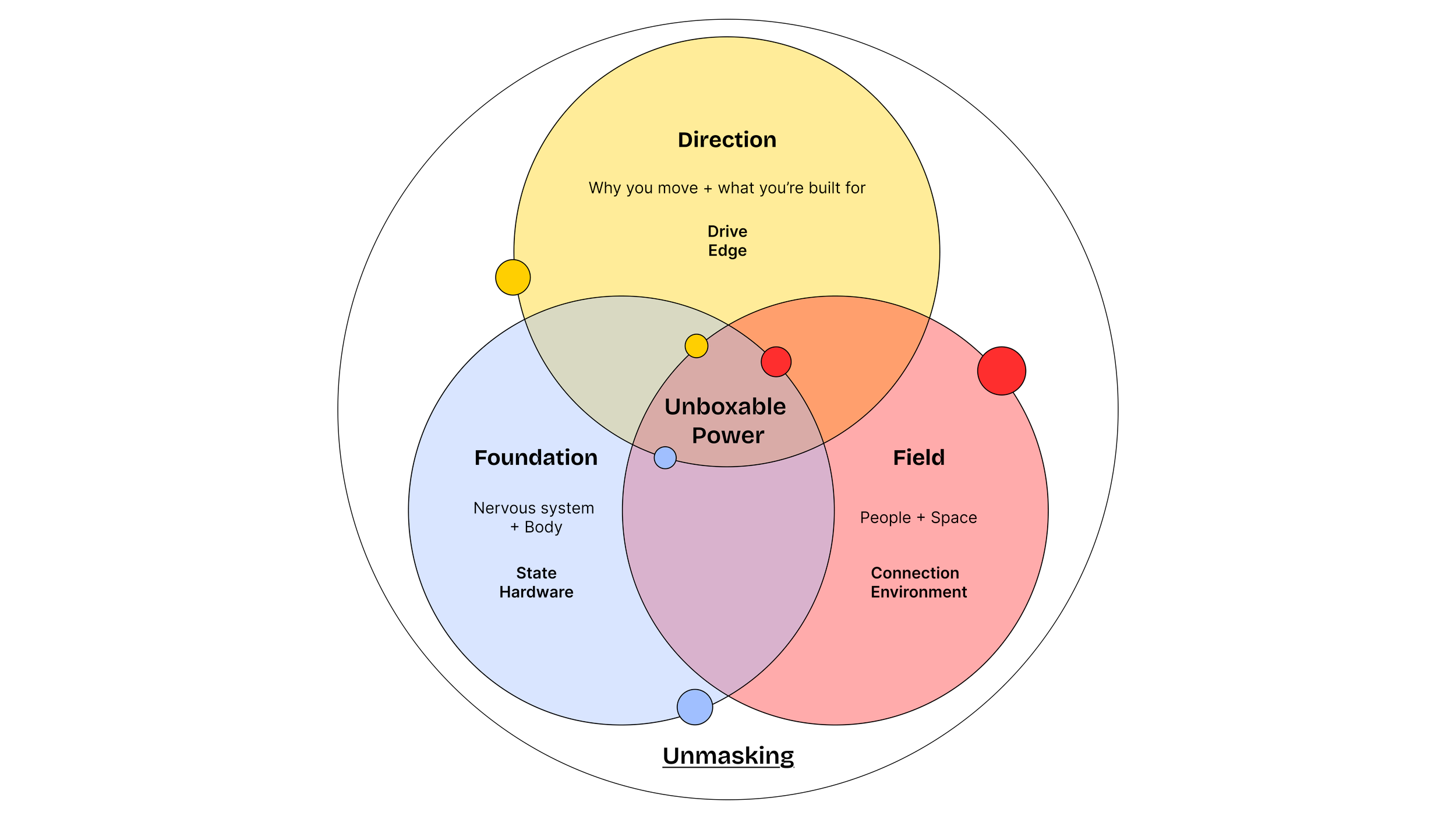
Line up all three pairs and the energy that used to go into holding everything together becomes available for the actual work instead. Not a burst you force. Power that holds.
Here's the part that's easy to miss: none of this happens automatically just because
you're wired differently. Being neurodivergent doesn't hand you a superpower -
it hands you a wider range, capable of more in the right conditions and worse in the wrong ones than most people's. These six conditions are what turn that range into something reliable, rather than something you get lucky with occasionally.
Let's walk through them.
Direction - Drive and Edge
Together, Drive and Edge decide where your power actually points - not in theory, but in what you get done on an ordinary Tuesday.
Drive - the reason you need before you'll move
Some tasks you can't put down.
Others - even the important, urgent ones - you can't make yourself start, no matter how much is riding on them.
That split isn't a discipline problem. Your system runs on genuine interest, not on obligation or importance, and no amount of willpower changes
what actually gets the engine turning.
Shows up as:
A weeks-old email to someone
who matters, sitting unanswered next to a side project you built at 1am, chasing a flash of inspiration that couldn't wait until morning
Edge - the thing you do that nobody else quite can
There's a specific thing you do that genuinely startles other people -
and it probably doesn't feel like anything special to you, because
it's never once been effortful. That gap, between how rare it actually is
and how ordinary it feels from the inside, is exactly why most people never get around to building their work around it.

Shows up as:
Colleagues assuming you spent hours
on something that took you twenty minutes, because you can't see why it would take anyone longer
Foundation - State & Hardware
Together, State and Hardware decide whether there's solid ground under everything else you're trying to build.
Direction doesn't survive long without it.
State - how steady the ground under you actually is
Strategy sits on top of your nervous system, not the other way round.
If what's underneath is still running threat-detection - watching for
what could go sideways, ready before you've even decided to be -
no plan built on top of it holds for long, however good the plan is.

Shows up as:
Feeling completely fine right up until something small - a slow reply, a raised eyebrow - sends you fully on edge for
the rest of the day.
Hardware - the body your brain
is running on
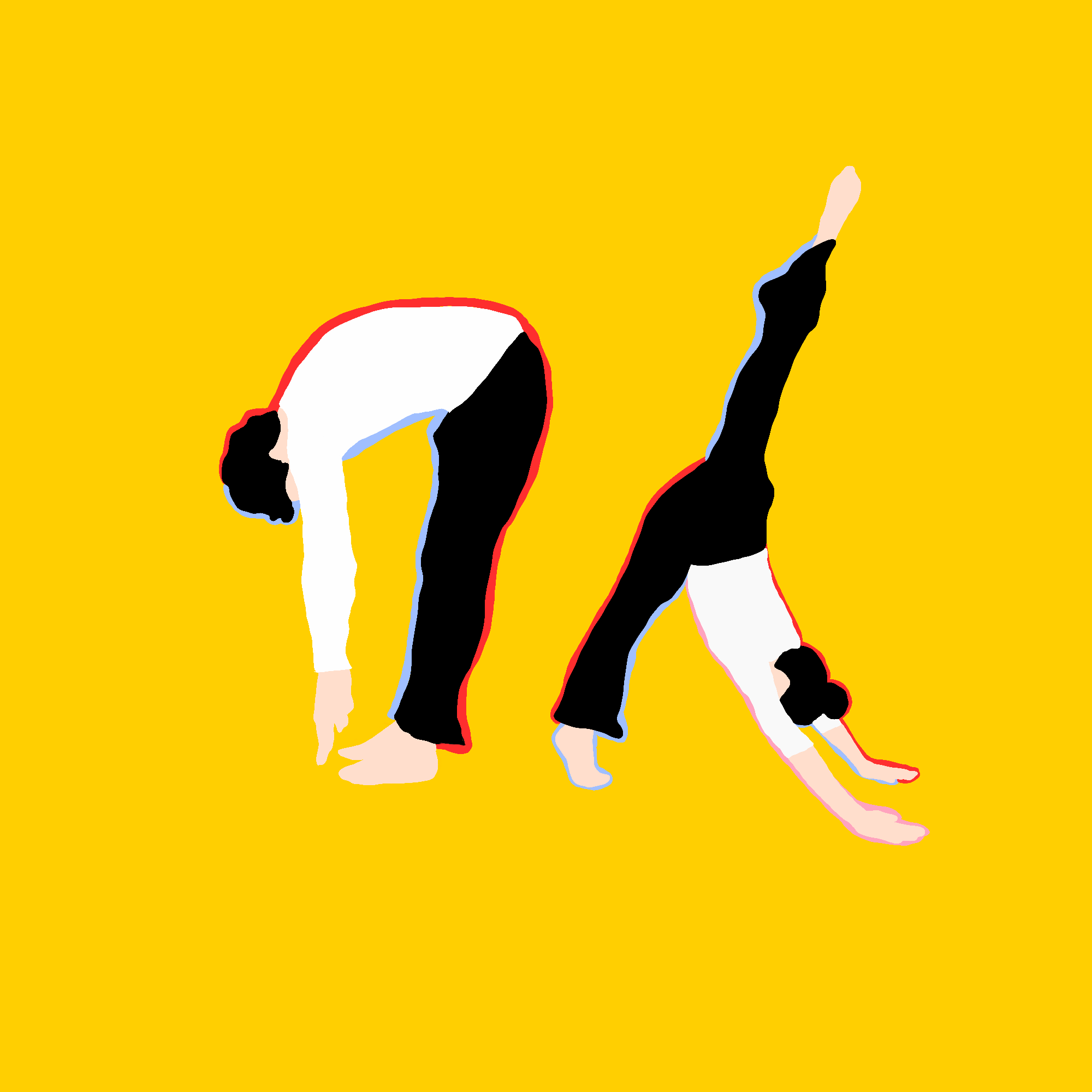
Your brain runs on a body that's probably more sensitive to its inputs than most people's - sleep, food, movement, all of it. Skimp on any of it and the cost tends to show up sooner and land harder than it would for someone else running the exact same schedule.
Shows up as:
One rough night's sleep wiping out your whole day, while someone next to you on the same four hours seems completely fine. Or: three or four hard workouts a week isn't optional for you - it's regulation. Skip it, and within days you're dysregulated: wired and manic, or simply unable to focus.
Field - Connection & Environment
Together, Connection and Environment decide whether the world around you is helping your effort land, or quietly working against it.
Connection - the people who help you regulate
Needing other people isn't a weakness you've failed to grow out of -
it's how nervous systems actually work; they regulate off each other.
Most people who carry a lot for others quietly treat connection as the reward you get once everything's handled, rather than one of the things that makes handling everything else possible in the first place.

Shows up as:
Feeling invincible when you've got the right people at the right intensity, and flat - maybe reaching for a drink, porn, or food to fill the gap - when you've been alone too long
Environment - the space you need built around you
Most people work inside whatever space and rhythm they're handed,
and adjust themselves to fit it. You don't really get that option - not because
you're precious about it, but because the wrong room, the wrong noise,
the wrong pace measurably changes what you're capable of producing that day.
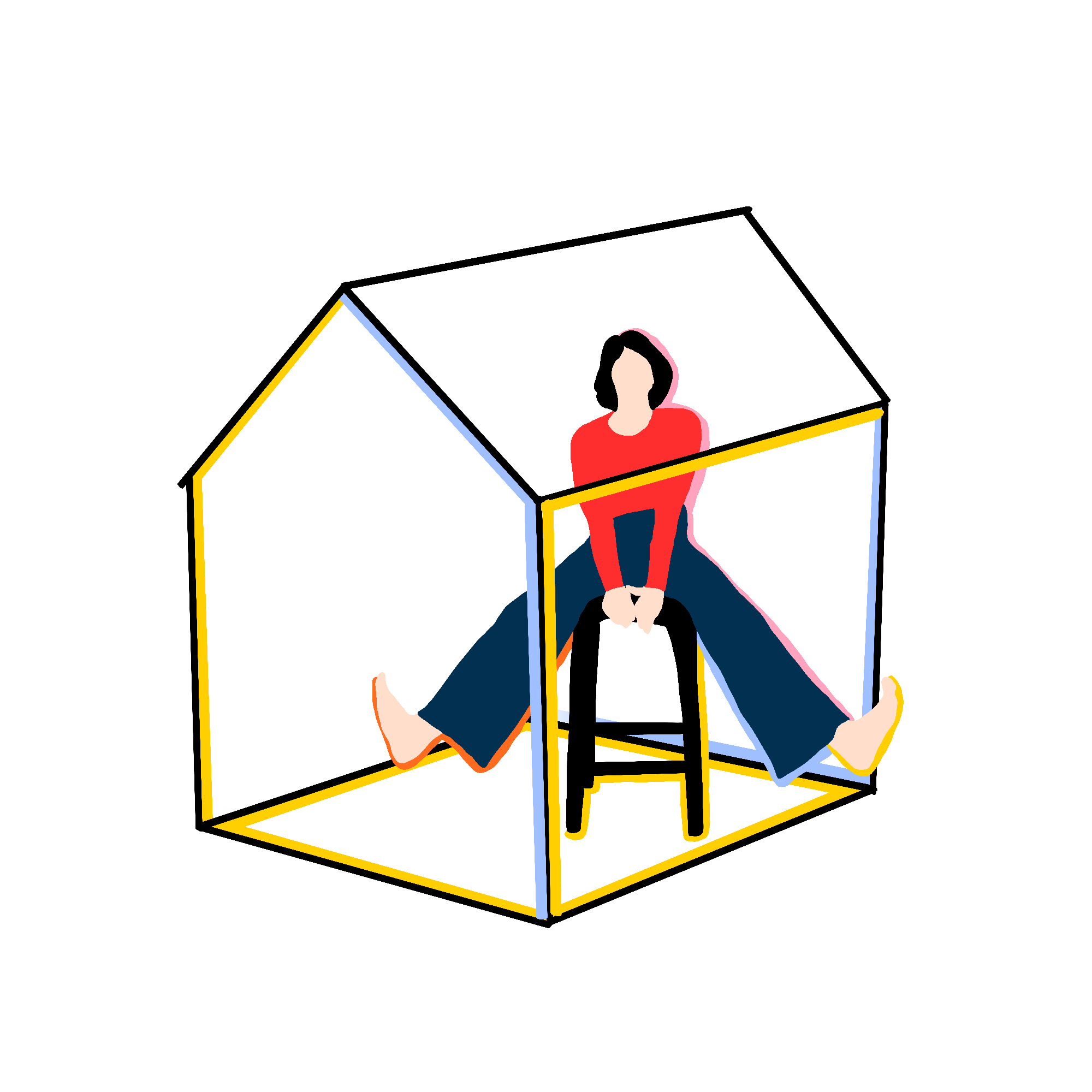
For Katja, the environment that actually worked turned out to mean almost nothing in it - literally. Sky and sand, no visual distraction, gave her brain the emptiness it needed to switch off and just be:
"In Egypt - sky and sand - I found so much. Just because there was no visual distraction.
Sometimes my brain just needs to see nothing or as few as possible. And in that - I am not the entrepreneur. I am not the mother. I'm not the horse rider.
I'm just there. I am.”
-Katja Staheli, Neurodivergent Unplugged Ep. 28
Not more input. Less. Designing your environment doesn't always mean better tools or a nicer desk - sometimes it means removing whatever your system has to keep reacting to.
The gateway - unmasking
Every condition above only works if it's actually you running it - not the edited-down version that's easier for other people to be around.
You can't build a life around your real edge while masking it. You can't regulate a nervous system whose main source of dysregulation is the masking itself.
Shows up as:
A meeting where you solved the problem five weeks ago and spent the hour
waiting for everyone else to catch up - or one about car parking spaces and annual leave - leaving you more drained than a genuinely hard one, because you still had to manage how you came across the whole time.
What changes when they line up
Line all six up and the work stops feeling like effort from the inside, even though what comes out the other end is often more than trying twice as hard would have produced. That's the actual shift - not becoming someone new, just finally running as the person you already are, in conditions built to fit them.
None of this is a one-time fix, either. Conditions slip - a hard month, a new role, a change at home - usually without announcing themselves. Treat the six of them as something worth checking back on, not a box you tick once and file away.
What this page isn’t
This page explains the framework -
what each condition is and why it matters.
It doesn't walk you through checking where you actually stand against each one,
or the one-page dashboard for coming back to when something's off.
That's the practical, working half -
and it lives in The Unboxable Operating Manual.