
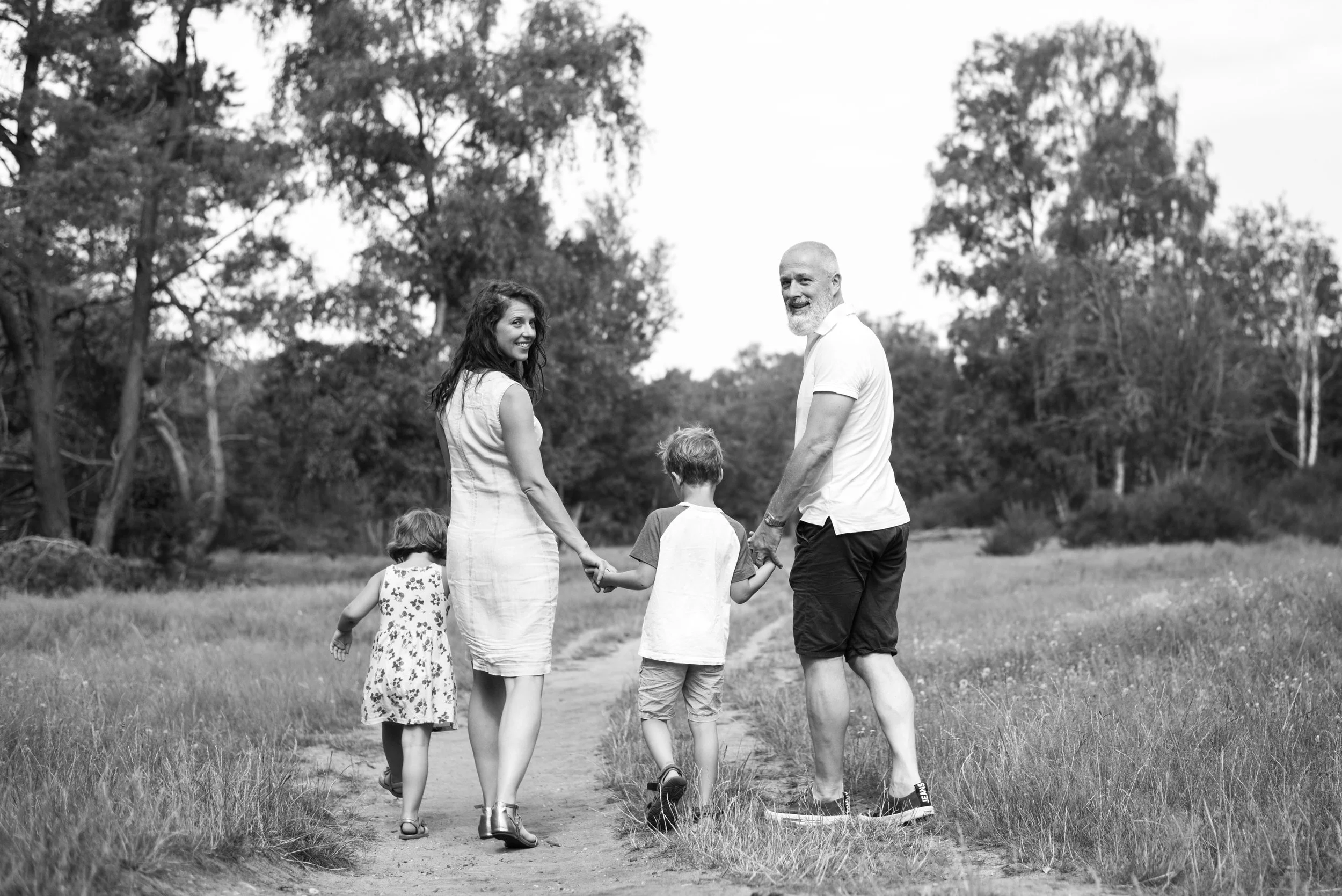
My five-year-old son
is the reason I finally
understood myself.
That’s where this work began.
Nobody arrives here thinking
"I need to become myself."
They arrive thinking
"I can't keep doing this."
Most of the people I work with didn't set out to be difficult or different. They set out to build something, or become someone, or simply get through life without it costing quite so much.
The identity found them - usually through years of being too much in some rooms and not enough in others, of achieving things that should have felt like arrival and somehow didn't, of paying a price for the way they're wired that nobody else around them seemed to be paying.
If you've made your way here, you probably know exactly what I mean.
-
I help driven, wired-differently humans stop masking - and start operating from their own centre rather than everyone else's idea of it.
Not by fixing what's wrong with you. There's nothing wrong with you. But by returning you to the ground that was always there beneath the noise, so you can lead, build, and live from that place - with nothing left to protect and nothing left to prove.
That ground is where the actual change lives - not a better mindset, but the energy you get back once you stop managing how you come across, and the people who finally get the real version of you instead of the managed one.
This is the work of The Unboxable Power Framework. Not a formula. A path back to yourself.
-
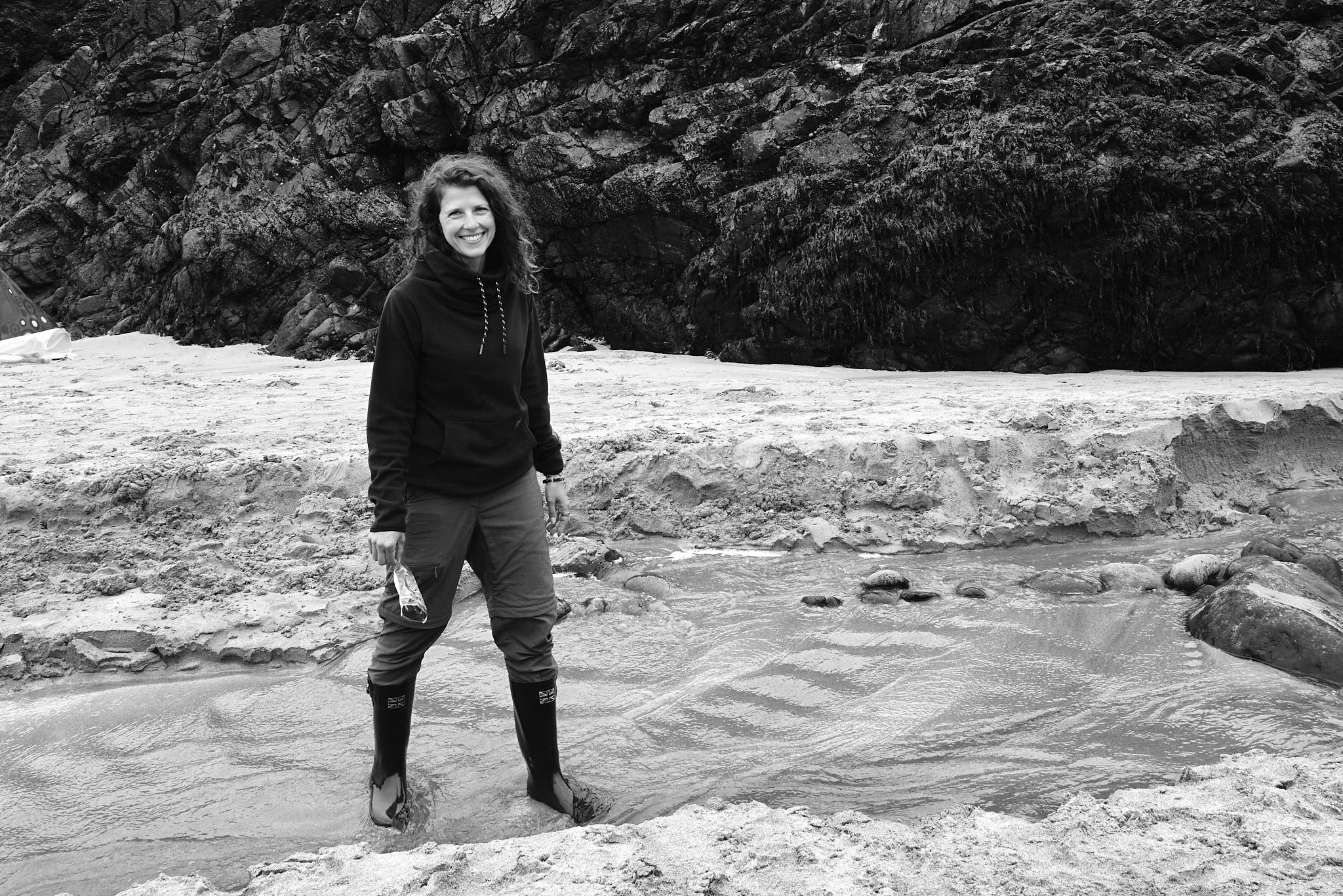
I'm Ania Hulsman. I've spent 16 years and 4,000+ coaching hours working with people like you - including seven years at the highest level inside Tony Robbins' organisation, before I built something of my own design.
Trauma-informed. Ontologically trained. Nervous system-literate. And someone who knows this terrain from the inside - not because I chose to be different, but because fitting the standard mould was never really available to me either.
"The credentials tell you I'm qualified. They don't tell you I've lived it. That's the part that actually matters here.."
-
I didn't come into this work because I had it figured out. I came into it because I didn't.
I grew up always feeling like too much and not enough at the same time. Born in London to a struggling, working-class Polish immigrant family, I always felt like an outsider - too intense, too weird, too much going on inside to ever quite settle into the shapes that seemed to come naturally to everyone else. I wasn't trying to be different. I was trying, genuinely and repeatedly, to be the same. It just never quite worked.
So I did what a lot of us do: I learned to mask. To adapt. To become whoever the room needed. I tried the normal path - studied hard, got my degree, pushed myself through job after job in real estate, retail, recruitment, teaching. Every time I started with genuine promise. Every time, eventually, something didn't fit. I worked harder than almost everyone around me just to keep pace with what seemed effortless for others. And the story I built about what that meant followed me everywhere.
At 25, I was diagnosed with dyslexia. At 44, with ADHD. Autism hasn't been formally confirmed, but the traits show up loud and clear. What those diagnoses gave me wasn't a condition to manage. They gave me a language for something I'd always experienced but never had words for - a way of understanding why the standard operating procedures never quite operated for me. And with that language came something I hadn't expected: relief.
For a long time I thought the problem was me. That I kept ending up outside the lines because something was fundamentally wrong with the way I was made. What I understand now is that the lines were just drawn for a different kind of person. The cost of staying inside them was simply higher than I could sustain.
-
It didn't start with me. It started with my son.
When he was five, a child psychologist first suggested he might be autistic or have ADHD. And because he is so completely my mini-me - in looks, in the way his brain fires, in the way the world feels to him - I had to stop and ask myself: is that true for me, too?
When I started looking into it, something quietly shifted. I wasn't lazy. I wasn't stupid, careless, or selfish. I wasn't broken by my childhood or failing at adulthood. My brain simply didn't come with a standard operating manual. And nobody had ever told me that was allowed.
The more I understood my wiring, the more I could experiment with unmasking. And the more I unmasked, the freer I became. Life went from feeling like a permanent uphill battle to something that finally had current behind it rather than resistance. It's still a journey of unfolding - I want to be honest about that - but I'm already genuinely so much more comfortable in my own skin. More trusting of myself. More at home in my own life.
Conditions, not effort
For seven years, I worked as an in-house coach inside Tony Robbins' organisation - one of 24 people selected from more than 2,000 applicants, at the highest level of the industry, with hundreds of clients, in some of the most intense coaching environments that exist. I was good at it.
And I was quietly burning out inside it.
Eventually I recognised something that felt important: I could serve people far better from
a place of genuine rest than from the edge of my own depletion. So I walked away and built something on my own terms.
In doing that I discovered the thing that now sits at the heart of all my work: you cannot sustainably lead, build, or create from a self you've suppressed. You can only do it from a self you've returned to and own.
The best example I have of what this actually means isn't professional.
In 2016 I gave birth to my daughter at home, unmedicated, with zero pain.
Not by luck - because I'd spent months understanding exactly what I needed, building the right conditions deliberately, and being crystal clear about my desired outcome. That's what peak performance actually looks like: not pushing harder through the wrong conditions, but creating the conditions in which your kind of brilliant actually works.
Why this work matters
When the conditions are finally right, minds built outside the standard mould don't just function better. They operate at a level that regularly astonishes everyone around them - including themselves.
I spent years in the wrong queue before
I understood that. Queuing patiently for a life I had never actually wanted. Once you see it,
you can't unsee it - and once you stop working so hard to get to the front, something remarkable frees up.
I've watched high-achieving, genuinely brilliant people - running hard, paying a cost nobody around them could see - begin to move differently once the conditions shifted. Businesses that had been plateauing. Relationships that had been strained. Work that had felt like masking starting to feel like contribution.
The pattern recognition. The lateral thinking. The capacity to hold complexity and surface solutions others simply can’t see. The intensity that, when it’s finally directed rather than scattered, produces work that genuinely changes things.
Without the right conditions, that stays locked. The achievement accumulates and the gap doesn’t close. More milestones, same distance from yourself.
This isn’t about potential. Potential is what you have when the conditions are wrong. This is about performance - what becomes available when a mind like that finally has the right ground to stand on.
Your kind of brilliant has always been there. This is the work of building the circumstances in which it actually gets to come out.
If any of this is landing, the next step is a conversation,
not a commitment.
What makes me different
I'm not a guru. I don't do shiny, generic formulas or quick fixes. What I do is help you get clear - honestly, and without burning you down further to do it - on what's actually running underneath the mask. Then we build from there.
"The more I unmask myself, the more I untrain myself from these standards we have in society, my true brain comes out. I just trained this brain a lot to function.”
- Katja Staeheli, Entrepreneur, Speaker
I'm unboxable, like you - which means I know what it costs, and I know what becomes possible when you stop paying it. And I feel people deeply. Not just who you are, but who you could become if you stopped hiding, stalling, or shrinking yourself to survive. That turns out to matter more than any methodology.
“Last year I arranged the babysitter, drove half an hour to the city, and arrived at a dance show to discover I'd booked the wrong week entirely.
We found art installations instead. They were genuinely extraordinary.
We maintain, firmly, that we won.
I share this not as a confession but as evidence:
I know my wiring. I know when something matters enough to build a system around it -
a client commitment, a deadline, a school pickup all have systems.
A spontaneous evening out with my husband does not. This is what making peace with how you're wired actually looks like.
It turns out to be quite freeing.”
This is personal
This isn’t abstract for me.
I live with people like this.
Love them. Parent them.
My two biological children are neurodivergent.
My two grown-up stepchildren too.
My niece and my nephew.
My husband, Dion-René - ADHD and giftedness,
which is as gloriously chaotic as it sounds.
We even work together now, co-creating workshops
that help organisations build cultures
where people like us don't just survive, but thrive.
And there's a deeper thread running through all of it.
My dad was just 50 when I lost him.
My brother only 24.
Both to preventable accidents.
Different circumstances,
but the same thread: lives cut short
by being misunderstood, unsupported,
unable to thrive in a world
that didn't know what to do with them.
I sit with that sometimes.
I carry that grief with me - not as a wound
that defines me, but as a driving force
to make sure fewer people like them
slip through the cracks.
A talk worth twelve minutes of your time
Everything on this page gives you the map.
This talk gives you the territory.
It's the clearest thing I've made about why
I believe that minds like these - in all their forms, diagnosed or not - are design rather than defect. In it I share the specific moments from my own story that taught me that, and why I think the world genuinely needs people built this way.
Not despite our differences.
Because of them.
12 minutes. Worth it.
If you'd like to keep listening
Neurodivergent Unplugged is where I have the conversations I wish I'd heard earlier - messy, magnificent stories from unlikely rebels
who have found their way back to themselves.
Many of them former clients.

You've just read the real story
Not the polished version.
If any of it felt like your own, that's not a coincidence, and it's not nothing.
A Chemistry Call is 30 minutes. No pitch, no pressure - just two people finding out if this is the right fit. For both of us.
No mask required.